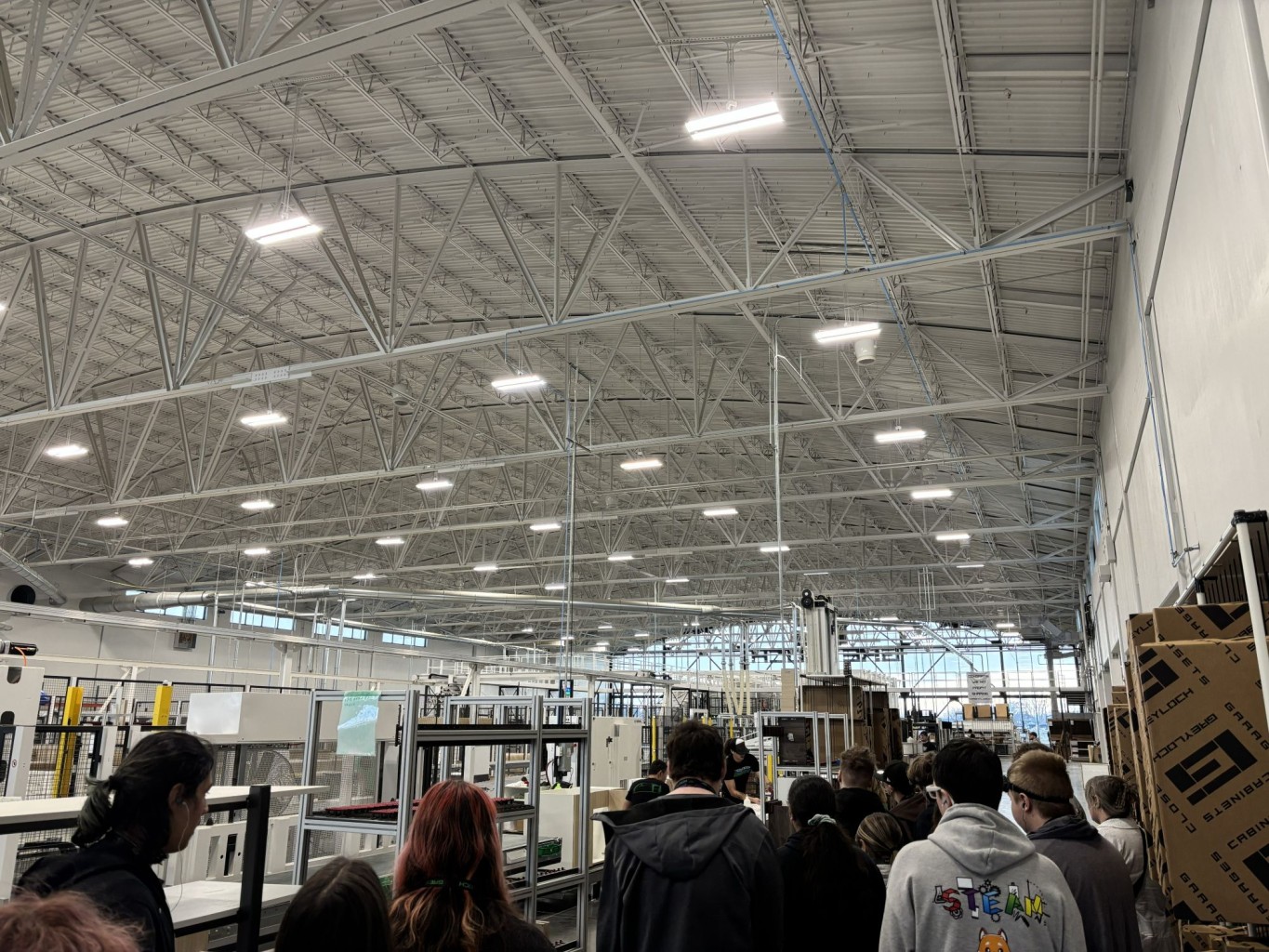
“I didn’t realize that was even a job you could have,”
was a common remark among students from Union School in Nampa after visiting workplaces around Idaho.
These students are part of the Union STEAM Kits, a school-run internship group that partners with Think Make Create (TMC) Works, a statewide workforce development initiative run by the Idaho Out-of-School Network. The learners, known as STEM Ambassadors, gain hands-on experience in STEM careers.
“TMC Works is a workforce development program for teens, young adults, and early career professionals,” says Amy Post, the Project Manager for TMC. “They gain STEM and workforce skills by learning about industry and teaching STEM education to younger kids.” The STEM Ambassadors and Supervisors undergo 20 hours of training and dedicate 80 hours to facilitating STEM programs with youth.
The program partners with employers, community organizations, and teachers doing similar work in the community. The Union STEAM Kits, led by educators Nicholas Rush, Jennifer Keene, and Jennifer Owen-Tillotson, focuses on the importance of career exploration that youth experience at different levels. “Exposure is the first thing. A lot of our students have not had the opportunities in the past to even be exposed to different careers. So they didn’t know that all of this existed,” mentioned Rush. Additionally, because many of the students have never been out of the Treasure Valley, exposure to industries around the state is also important. “Just last month, we took them to Twin Falls, and we saw two different career paths there: Artisan Labs, a cosmetics factory with chemists and manufacturing, and then we also took them to the Idaho Power plant and they got to see the hydroelectric power, how that works, and the different career opportunities there.” The experience opened the eyes of many of the students who said, “It gave us backup plans and showed that no matter what, there’s a bunch of careers to choose from, so you can literally go out and do what you want to do.”
Two students who spoke at a youth conference in October reflected on the professional development aspect of the program: “We got to see what it’s like in a work environment. We got to learn and talk to all these people who knew a lot more than we did.”
But exposure alone isn’t enough. When students teach STEM concepts to younger children, they have to break ideas down, answer questions, and think through problems more deeply. That process strengthens their own understanding and builds skills they can carry into real workplaces. STEM Ambassadors apply what they learn by teaching STEM to elementary age students through activity booths at venues like the Discovery Center and Boise Zoo, and in elementary classrooms. “They are doing all aspects of the planning and preparing. They’re communicating with teachers, handling marketing, managing schedules, and running the programs,” says Post. The ambassadors facilitate these programs end-to-end, and the Union High ambassadors have even created a STEM lab and maker space at their school, where they host field trips for elementary students from across the district. This student-led initiative demonstrates the real-world professional skills participants develop. “It’s important for kids to develop an interest in STEM, and to be exposed to it early, find some success, and have some fun doing it at a young age. These teenagers are getting exposed to it, but really, the work they’re doing with the elementary age children is where it needs to start,” says Post.
The personal transformations are visible. Kylin, a STEM Ambassador supervisor in her second year of the program, shared her biggest takeaway: “I tend to have a hard time working with other people. This just brings a lot more opportunities to actually be with a team, do teamwork, build things, and improve communication.” The experience has changed her trajectory. She’s now considering becoming an art teacher, inspired by the hands-on learning experiences she now helps create, which she never had as a child.
“[The students] have really gained a lot of confidence, and gained a lot of communication skills especially. That’s probably the biggest gain that we’ve seen.”
The program is achieving its goals. “Our goal is 250 participants, and we’re almost there. We’ll have achieved that many participants by the end of this summer,” Post says. TMC Works recently secured additional funding from the STEM Next Foundation, through a federal Department of Labor award to continue and expand the program. The next phase will place even larger emphasis on career development, making workplace visits and career exploration activities a required component rather than optional.
For the students themselves, the impact is personal. “My voice finally feels heard,” Kylin says. “When we teach kids, and we have programs like this, it’s super important that we upkeep it so that the future’s still bright for more learning programs.”
To learn more about TMC Works, visit their website: https://idahooutofschool.org/providers-and-educators/tmc-labs-for-educators/about-tmc/

Read our other stories!
Turning the Tide on Turnover: Small Business Solutions Through Education
“Our problem is churn rates. For staffing and availability for staffing.” Bryan Matsuoka, Regional Director…
Monica McDonald – WDC Extern
“You know those projects that you go, ‘Gosh, it would be nice to have, but…

Believing in a Future: How Idaho LAUNCH for Students Helped Hayley Break Barriers
“I always wanted to attend college, but I was so nervous about how I would…
Isabelle Jenkins: WDC Spring Intern
Meet Isabelle Jenkins Isabelle joined the Idaho Workforce Development Council as our Spring 2025 intern…

Boise State University: Cyber Operations and Resilience Success Story
“When I designed this curriculum, I wanted to teach [students] how to think, because it’s…

Idaho Rural Water Association
Gary Sievers, a professional trainer with the Idaho Rural Water Association (IRWA), remembers each of…